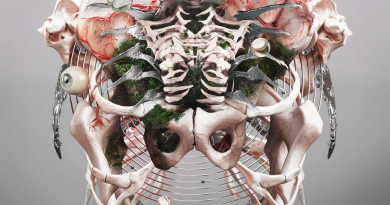
The Gloom In The Corner – Royal Discordance
The Gloom In The Corner – Royal Discordance
SharpTone Records
Release Date: 27/02/26
Review by Jon Deaux
7.5/10
There is a desire unique to Metalcore. What if this mosh riff is not enough? But with lore?” Not “but with feeling.” Not “but with heartache.” Lore, as has been demonstrated time and time again, is not the only bad word out there, you unenlightened heathens. No, we desire kingdoms and betrayal and gun fu. We must, in fact, desire the presence of the flaming sword. And so, this is perhaps what we might call Royal Discordance in 2026: the desire to be more than the sum of your parts.
You’ve got a ton of Metalcore bands out in the world today, and they’re trying to outdo each other, I guess you’d say. It’s like an arms race of Metalcore bands out there. Every single one of them feels the need to be justified in screaming about a betrayal over the same drop-tuned chord progression that every Metalcore band has used since 2008. But The Gloom In The Corner are out to get the top spot with an album that, from what the evidence shows, seems to have been inspired by reading Game of Thrones and John Wick and whatever comparison text you need to read to draw the conclusion the band drew: the only thing you can be is brutal.
The Gloom In The Corner have always seemed to have a propensity to regard their albums as sacred texts that have been indecorously leaked from the Director’s Only section of Hot Topic, but here they actually pull off an apocalypse and provide the lyrics as though you need to obtain a document that the CIA wants to keep classified. Somebody has managed to place Australia under the foot of King Baphicho again, for reasons that should be perfectly obvious: simply, one would imagine that the initial time around just did not have quite enough trauma attached to it, or that somebody is planning a revolution, because Clara Carne is leading that revolution at simply the same moment that heaven is dispatching an army, that a detective is on the scene, and that somebody is probably bleeding in slow-motion fashion, with candles aglow illuminating a scene set inside a church. It’s Shakespeare. It’s Anime. It’s ‘Macbeth'(?) with a double kick pedal and a cigarette.
The album begins much like a bulldozer busting through the door, “The Problem With Apocalyptic Tyranny,” sounding less like the title of an album and more like the graduate thesis statement, only mixed over a blast beat rhythm scheme. The band does little to guide you into their reality; they simply place you in it, much like you somehow manage to sneak up on a rebellion and someone has provided you with a rifle. The guitars are crisp, sporting the sharp edge of the contemporary Metalcore sound: precise, almost surgical, and beyond removed, just on the brink of madness.
‘You Didn’t Like Me Then (You Wouldn’t Like Me Now)’ is used as the first thesis statement for the album, and it does that very successfully as a theatrical, venom-fuelled snarl that seems to imply that the person giving this speech has spent at least a few hundred hours looking in the mirror preparing it. As it takes off, however, it is quite sincere in its method of self-acceptance that borders on masochistic until one is able to grasp the appeal of the song and realize that it is about change. It is the “glow up” song the world has been waiting for about the people out there that live a life of revenge, an Olympic sport. Sweeping into the melodrama of the people who are obsessed with bands like My Chemical Toilet (Sorry, Romance), however, this is a very successful double-edged barb of sarcasm. The lead singer named Mikey Arthur has the audacity to state that “We’re asking ourselves: what if The Gloom In The Corner wrote a My Chem song?” – and that is quite refreshing, to say the least.
“Nope (Hollow Point Elysium)” is a song that sounds off with the clicking of a gun because, quite frankly, subtlety is just not an option anymore, at least not after the first act. It is not really a song so much as a cutscene that is actually playable. The song has a beat that would make a chiropractor roll in riches. The song itself is simply exploding with the breakdown that happens, however, because of the detonation factor. The lyrics are just dripping with over-the-top anti-hero pessimism of the type that just invites the player to buy a moral compass as DLC altogether. Arthur talks about writing John Wick and Max Payne fanfic just so he can blast beats.
‘Angel’s Wrath Whiskey’ is an opportunity for emotional punching bag-turned vengeance-wielding Rachel to finally have her moment to set the script ablaze. The drums have a runtime akin to a hunt where rabbits chase their own after-effects. The strings detonate because someone figured out that “epic” is a function in their production software and has never looked back, and the chorus, quite simply, was made to be fist-pumped, even when you have no idea who you’re rooting for.
It’s weird to say it for a group this maximalist, but ‘Royal Discordance’ really is surprisingly well-structured. The chaos has been curated. This is a group that has obsessed over the idea of making sure this music does not tank under the load of this lore. It’s a group that has obsessed over the idea of songwriting to an extent that this music doesn’t feel like a lore drop with blastbeats. The repetition of the choruses, the sense of familiarity in them – there’s something like a villain returning in this music. It’s not like they threw everything and the kitchen sink at the wall and hoped something stuck. It feels like they built this cathedral and are setting it on fire on purpose.
‘Short Range Teleportation (A Guide To Guerilla Warfare)’ is arguably the most self-aware title of the lot, and that is really saying something. It is aware of the tactical absurdity inherent in the idea, yet also on some level, with the corner of an eye that you can neither see nor feel, winks at you. The references are quite accurate in terms of mindset, though. The vocals have got sneering and screaming in them. It is, like, ridiculous and totally serious on the most ridiculous level, and that is perhaps in ways kind of like the point of the whole exercise, you know?
‘Painkiller Soliloquy’ and ‘Shadow Rhapsody II’ are simply the continuation and progression of the melodrama. It’s an expansion of the emotion being voiced through the songs. It’s not an aggressive album. There is a hint of perceived emotion through the characters in the songs. They are not performance puppets of aggression. The parts with clean vocals express a sense of vulnerability, as does the screamed portion of the tracks. It’s the realization that overthrowing the idea of dictatorship does not translate into overcoming emotional turmoil. Evidently, therapy is beyond the budget for the activist.
‘By the time ‘Assassination Run’ comes barreling in, the album has already hit full speed. It has no respite, no breaks, and no letup. It is an album that is made for a live show with a hundred people crashing around in relative unison; grooves thick enough to wear on your sternum, and a chorus that bounces off the walls. It is not an album, it is a group therapy session under the guise of entertainment.
Then comes the two-part finale, ‘Love I: A Quaver Through the Pale,’ and ‘Love II: A Walk amongst the Poppy Fields,’ reminiscent of the emotional ending. This time, the band takes the grandiose quality of the work another notch higher, thereby giving the story a sigh of relief. The story is tragic, yet no less sentimental; it is theatrical, yet no less absurd; it has hints of the funeral, yet not irreconcilably sweet. It is grandiose, depressing yet cathartic precisely because it is a goodbye letter, not only from the listeners but also the characters themselves. It must be understood that, despite the shootouts and turf wars, the story ends with the ending of emotion: the goodbye.
The secret to ‘Royal Discordance’ not being completely terrible is, of course, not just that this is an ambitious undertaking. There are many bands out there who are attempting this and failing not because of anything other than their concept art, which encompasses their entire musical output. It’s obviously not just this, though. It’s obviously the fact that, no matter how hyperbolic and dystopian and how exceedingly violent everything gets, there’s always a sense of humanity driving everything. A concept of wanting to matter. A desire to change. A desire to scream into the void and have the void scream back. It’s chaotic, yes. It’s chaotic, although somewhat universally so. It’s like everyone has a tyrant to live with. It’s like everyone has a sense of redemption to which they aspire. It’s not always melodic.
“We would never recreate the same album again,” the boys in Gloom In The Corner proudly declare. Well, good for them. Because with Royal Discordance, they’ve achieved what one can really call an album shaped in the image of an explosion—an utterly ridiculous explosion of ridiculousness taken to absurd levels of ridiculousness, and yet and yet and yet and yet. This is Metalcore mythology. This is Metalcore therapy. This is Metalcore show. Will you remember the tale of Clara Carne five years from now? Who am I kidding? Not a chance. Will you remember a band with the balls to actually follow through with it? Now that’s a possibility.
Somewhere in this parallel universe, the revolution is in full swing. In the real world, the pit, the refrain, and for perhaps three and a half minutes, the cacophony is king.
TRACKLISTING:
01. The Problem With Apocalyptic Tyranny
02. You Didn’t Like Me Then (You Wouldn’t Like Me Now)
03. Painkiller Soliloquy
04. Short Range Teleportation (A Guide To Guerilla Warfare)
05. Nope (Hollow Point Elysium)
06. Angel’s Wrath Whiskey
07. Shadow Rhapsody II
08. Assassination Run
09. That’s Life (Carry Me Home)
10. Army Of Darkness
11. Love I: A Quaver Through the Pale
12. Love II: A Walk Amongst The Poppy Fields
LINKS:
Disclaimer: This review is solely the property of Jon Deaux and Ever Metal. It is strictly forbidden to copy any part of this review, unless you have the strict permission of both parties. Failure to adhere to this will be treated as plagiarism and will be reported to the relevant authorities.