EMQs with Boston’s Final Raid
Hi everyone! Welcome to another EMQs interview, this time with USA Heavy Metallers, Boston’s Final Raid. Huge thanks to their guitarist and co-founder, Bruce Owens, for taking part.
What is your name, what do you play, and can you tell us a little bit about the history of the band?
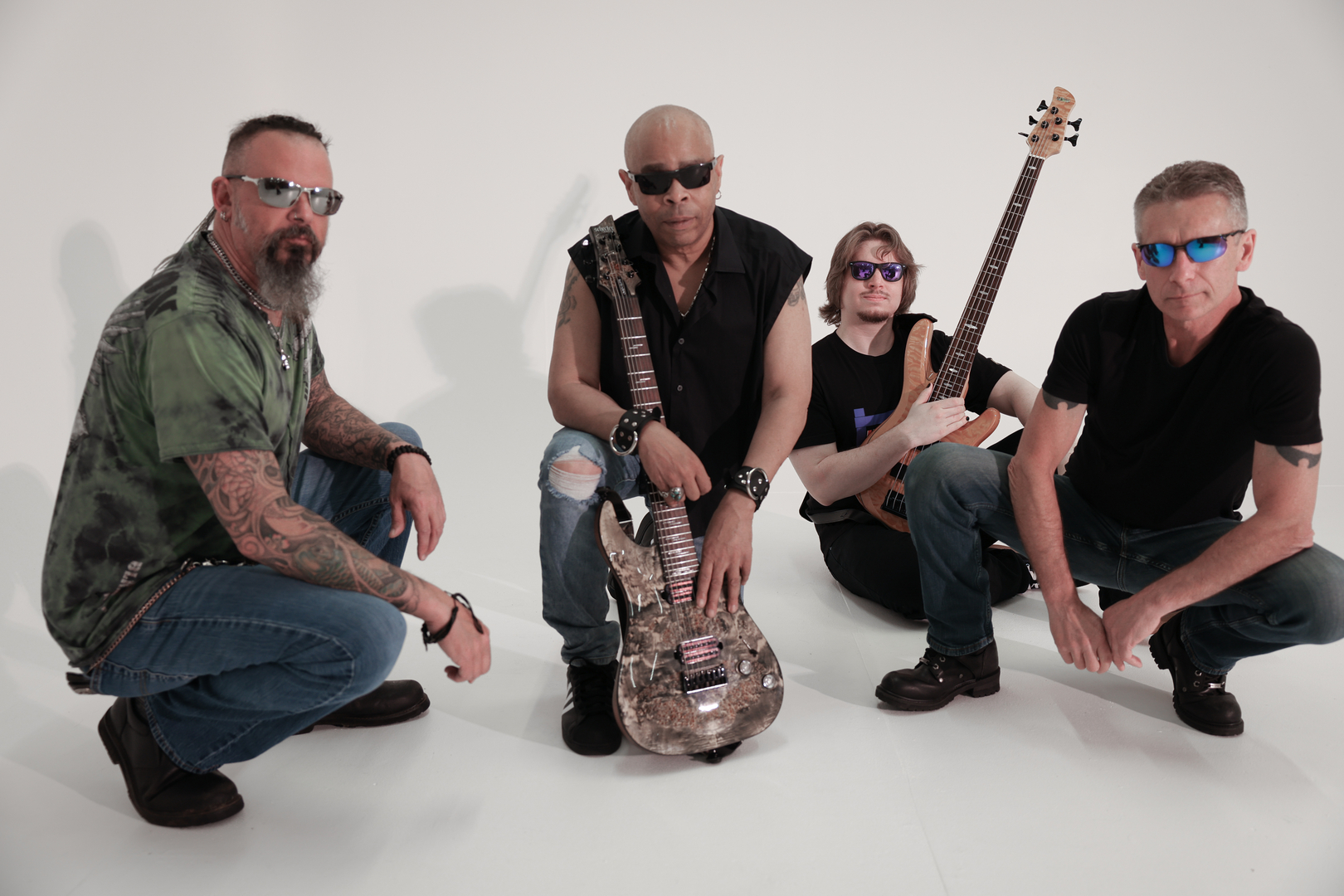
My name is Bruce Owens, and I’m the guitarist and co-founder of B.F. Raid. I also play keyboards and mandolin, including on Combat Zone. I started the band in 1981 with our original bassist, Len Ponn, and drummer Barry Silverman. Bill Kotowski joined on vocals about a year later, although Bill and I had already known each other since we were toddlers.
We came up playing the Boston club circuit. The current lineup is Bill, Matt “Moose” Howard on bass, Jamie Forbes on drums, and me. We released Raided Again in 2024, followed by Combat Zone in 2026.
How did you come up with your band name?
Len & I were about sixteen or seventeen and kept discovering that names we liked were already taken. We liked the word “Raid” and eventually put the letters B and F in front of it. The original expanded version was “Bloody F-ing Raid.” “Boston’s Final Raid” came later as the cleaned-up version.
There wasn’t some elaborate meaning behind it. We were teenagers trying to name a loud band. People sometimes hear “be afraid” when you say it quickly, but that wasn’t intentional.
What country or region are you from, and what is the metal/rock scene like there?
We’re from right outside Boston, Massachusetts, in the United States. Boston has a remarkably rich rock history, and growing up in the area meant being surrounded by generations of music. The city has produced or helped launch influential artists across rock, punk, hardcore, metal, alternative, and indie music. Places such as The Rat, The Channel, The Paradise, and many smaller clubs gave local bands opportunities to develop in front of real audiences. Even when a venue was rough around the edges, it could be an important part of a band’s education.
The scene I grew up in was especially concentrated. Metal, punk, hardcore, industrial, and plenty of other music existed within walking distance or a short ride away. You could go out to see one band and discover several others on the same bill. There was a strong sense of community, but there was also healthy competition. Bands pushed one another to write better songs, put on stronger shows, and find their own identity.
College radio was another major part of Boston’s musical culture. Stations such as WMBR at MIT and WERS at Emerson helped expose listeners to independent, underground, and local music that commercial radio often ignored. College radio gave emerging bands a way to reach people beyond the clubs, and it helped create a connection between musicians, DJs, record stores, promoters, and fans. Hearing a local band on the radio could make a huge difference, especially before the internet made it possible to share music instantly.
That combination of clubs, college radio, record stores, rehearsal spaces, and dedicated listeners created an environment where bands could grow organically. You had to show up, play live, meet people, and earn an audience. I miss that concentration of clubs and the friendships that developed around them. Those experiences still influence how I think about music and community.
What is your latest release?
Our latest release is Combat Zone, which came out on July 30, 2026. It’s a ten-song album available digitally and on CD, with “Punchdrunk” as the lead single.
We’ve described Combat Zone as an audio documentary about Greater Boston. The album grew out of our desire to capture the places, people, relationships, nightlife, and difficult experiences that shaped us. The title refers to Boston’s former Combat Zone, the city’s adult-entertainment district, but the record is not only about that specific area. It’s about the wider atmosphere surrounding it and the world we knew growing up in and around Boston.
The writing approach was very much rooted in observation and memory. We wanted the songs to feel like snapshots of real people and situations rather than abstract stories. Some tracks draw on neighborhoods and nightlife, while others focus on friendships, conflict, ambition, and the strange characters you encounter in a city. There’s humor in parts of the record, but there’s also darkness and a sense of consequence. We tried to let those contrasts exist together because that felt more honest to the environment we were describing.
Musically, we approached the album as a balance between the band’s heavy-rock identity and a broader range of influences. The songs needed to have strong riffs and energy, but we also wanted room for atmosphere, unusual textures, and more expressive arrangements. I played guitar throughout, but I also contributed keyboards and mandolin, which allowed us to add colors that would not have been possible with a straightforward guitar-bass-drums approach. My interest in jazz, progressive rock, psychedelic music, Brian Eno, and Olivier Messiaen also influenced the way I thought about space, tension, repetition, and texture while writing.
Who have been your greatest influences?
My greatest guitar influences include Eddie Van Halen, Frank Zappa, Randy Rhoads, Glenn Tipton, Steve Vai, Allan Holdsworth, and Jimmy Page. Each of them showed me a different way to approach the instrument, whether through technique, tone, phrasing, experimentation, or songwriting.
My influences also extend beyond guitar and heavy metal. Brian Eno has been a lasting influence, and while writing Combat Zone, I became particularly interested in Olivier Messiaen. I also draw from jazz, blues, progressive rock, and psychedelic music. All of those interests give me different ways to approach a heavy song without losing its weight or direction.
What first got you into music?
I grew up with very different kinds of music in the house. My father loved jazz, while my mother listened to artists like Elvis Presley, Elton John, and Carole King. That gave me a broad starting point.
When I discovered guitar as a child, it became something I wanted to keep exploring. I played in bands as a teenager and later attended Berklee College of Music in Boston. That curiosity has stayed with me throughout my life.
If you could collaborate with a current band or musician, who would it be?
I would love to jam with Jimmy Page. Page has a very technical and progressive approach at times, but he can also kick back and play some blues. The pressure wouldn’t be on the whole time; there would be room to relax and let the music flow wherever it wanted to go.
If you could play any festival in the world, which would you choose and why?
I’d choose Wacken Open Air. The opportunity to bring B.F. Raid to that setting and connect with metal fans from different countries would mean a great deal to us.
Combat Zone has been reaching listeners internationally, and I’d love to take that connection beyond recordings and interviews. Playing those songs in front of an overseas audience would be a powerful next step.
What’s the weirdest gift you have ever received from a fan?
I don’t have a particularly bizarre gift story to offer. What stands out more is the loyalty people have shown us. Some fans have been with B.F. Raid since the cassette days, and now we’re seeing that connection continue through their families. Knowing that the music has remained part of somebody’s life for that long means a lot.
If you had one message for your fans, what would it be?
Thank you for continuing to give us your time and attention. Whether you remember the early band or just discovered Combat Zone, we appreciate you being here.
If a song connects with you, share it with someone. Tell a friend, request it from a station that supports independent music, or come talk to us online. Those personal connections help this band grow, and we never take them for granted.
If you could bring one rock star back from the dead, who would it be?
Jimi Hendrix. I’d be fascinated to hear what he would have created with more time. There was so much imagination in the way he approached the guitar, and I’d want to hear where that curiosity took him next. The possibility of hearing music he never had the chance to make is what draws me to that choice.
What do you enjoy the most about being a musician? And what do you hate?
I love the moment when an idea becomes something the whole band owns. I can bring in a guitar part with a particular direction in mind, and then Moose, Jamie, or Bill contributes something that changes it completely. Hearing a song become stronger through that process is tremendously satisfying.
What frustrates me is how much time the work around the music can consume. Promotion, scheduling, administration, and keeping everything moving are necessary, but they can take you away from writing and playing. Finding the balance is an ongoing challenge.
If you could change one thing about the music industry, what would it be?
I’d want musicians to receive fairer compensation for the work they create. Making a record requires time, skill, equipment, and money long before anyone hears the first song.
I’d like more artists to be able to build a sustainable career around a committed audience. If people value your music and actively support it, there should be a reasonable path toward continuing that work without having to stretch yourself in every direction.
Name one of your all-time favourite albums.
Kind of Blue by Miles Davis. It’s one of those records I can return to repeatedly and still hear something new. The playing is extraordinary, but what really stays with me is the space, restraint, and interaction between the musicians. It’s a masterclass in listening and responding, and those qualities are valuable in any kind of music.
What’s best: vinyl, cassettes, CDs, or downloads?
I’d lean toward CDs for the combination of sound, convenience, and having something physical to own. I like the artwork, the credits, and the experience of spending time with a complete album.
Cassettes have a connection to our early history, and downloads make it easy for people around the world to discover us. Every format serves a purpose. The main thing is giving the music enough attention to find out what’s there.
What’s the best gig that you have played to date?
One that always stands out is an early show at The Rat in Boston. We managed to get ourselves asked to leave twice before soundcheck and again before playing. We were young and behaving like it. Each time, we apologized and were allowed back in.
Then we played, the audience stayed with us, and afterward the club was willing to book us again. That night captures the early band for me: immature behavior around the edges, but a real connection once the music started
If you weren’t a musician, what else would you be doing?
I already work in the software industry, helping engineering organizations understand and solve complicated problems, so that would probably occupy more of my time.
There’s a part of me that enjoys understanding how separate pieces work together. That carries into music, too. But music gives me a different kind of freedom, and it’s difficult to imagine being satisfied without some creative outlet.
Which five people would you invite to a dinner party?
Assuming we can choose people from any era, I’d invite Keith Moon, Jim Morrison, Sid Vicious, Dimebag Darrell Abbott, and Taylor Swift.
I’d invite Taylor for one reason: to watch the terror and horror on her face as the other four and I ripped it up. It would be an utterly chaotic evening, but I suspect it would make for an unforgettable dinner party.
What’s next for the band?
We’re continuing to introduce Combat Zone to new listeners and build relationships with the radio stations, publications, and interviewers supporting the album. We want those relationships to continue beyond one release.
We’re also writing and exploring what this lineup can do. Within The Wine is a concept EP idea we want to develop further, drawing on material connected to the Raided Again and Combat Zone sessions. We’re allowing the songs to develop before putting a timetable around them.
What social media and website links do you use to get your music out to people?
Our website is the central place for band information, music, news, and merchandise. Facebook and Instagram are where we share interviews, radio coverage, videos, and updates. These are the main places to find us:
Website: B.F. Raid — https://www.bfraid.com
Facebook: B.F. Raid — Boston’s Final Raid — https://www.facebook.com/profile.php?id=61561887293466
Instagram: @bfraidboston — https://www.instagram.com/bfraidboston/
YouTube: B.F. Raid’s channel — https://www.youtube.com/channel/UCF0Kx72Mf5wLDq12_uydTUg
Bandcamp: B.F. Raid’s music — https://bfraid.bandcamp.com/
Punchdrunk: Listen on Spotify — https://open.spotify.com/track/7xZppxpmr0F9GeKUjAj5bC
There’s a long-standing food-based debate here in the UK, and we’d like your help. A Jaffa Cake: is it a cake or a biscuit? Discuss!
I’m voting cake. The sponge is what settles it for me. Making something small enough to eat like a biscuit doesn’t change what it is. I realize I’m entering a British argument from the other side of the Atlantic, but you asked me to choose, and that’s my answer.
Thank you for your time. Is there anything else that you would like to add?
Thank you for giving B.F. Raid the opportunity to share our music and some of the history behind it. Combat Zone contains a lot of our lives, and we appreciate everyone who takes the time to listen closely.
If this interview is your introduction to the band, start with “Punchdrunk,” “The Greatest Show In Town,” or “Divebar Allstars,” and then explore the full record. We’d love to hear what stays with you. And to everyone who has supported us over the years, thank you for continuing to be part of this.
Disclaimer: This interview is solely the property of Ever Metal. It is strictly forbidden to copy any part of this interview unless you have the express permission of said party. Failure to adhere to this will be treated as plagiarism and will be reported to the relevant authorities.