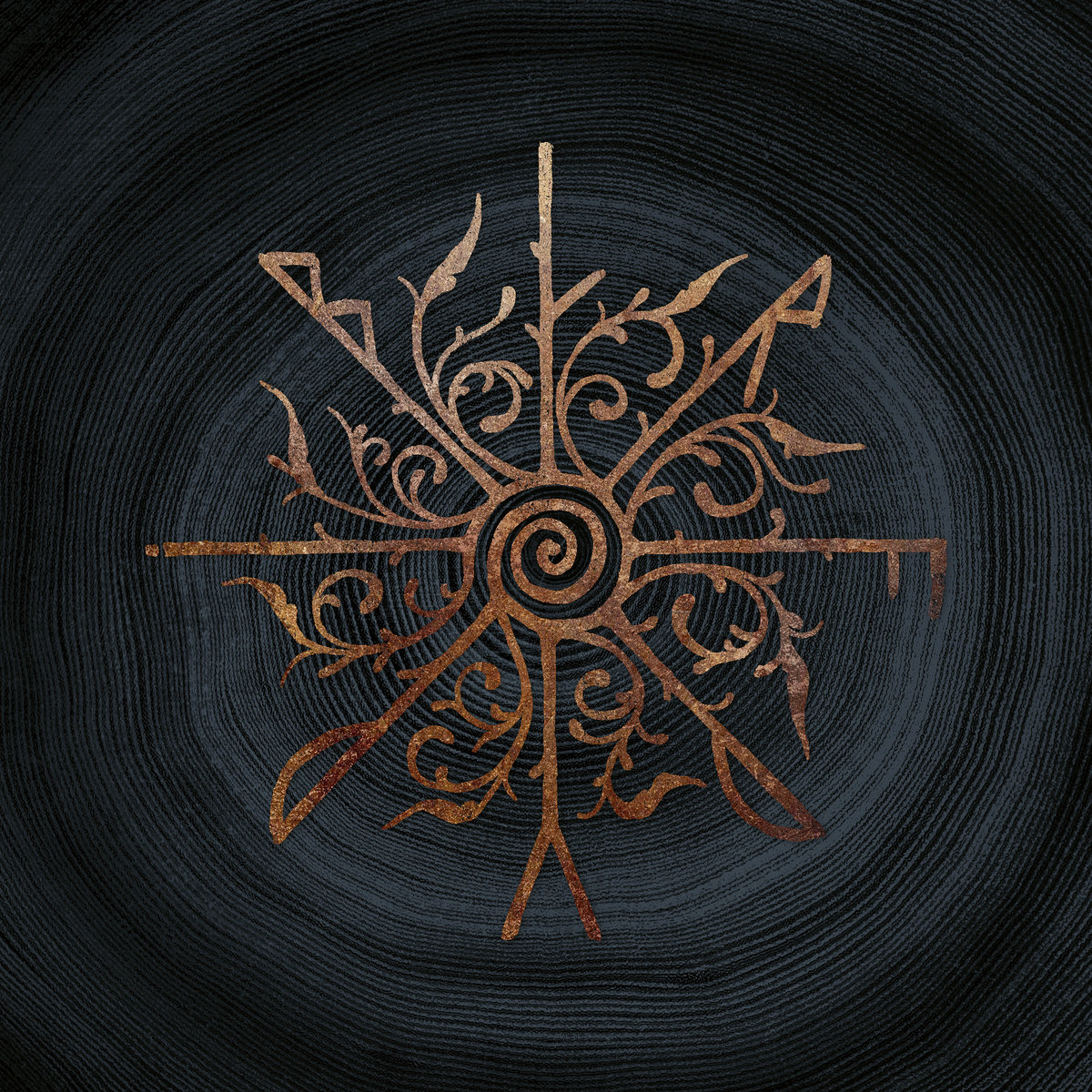
GÅTE – Sigil
GÅTE – Sigil
Season of Mist
Release date: 25/09/26
Review by Rick Eaglestone
9/10
More than two decades into a singular career that has carried them across chart summits, sold-out halls and even the Eurovision stage, Norway’s GÅTE return with their most ambitious incantation yet: Sigil is a ten-track passage through enchantment, prophecy, mortality & rebirth, drawn up from the deepest wells of Nordic folklore.
GÅTE have spent the better part of three decades perfecting an amalgamation that has no real rivals; a sound in which centuries-old ballads, the kveding vocal tradition and the sacred rasp of the Hardanger fiddle are threaded through the muscle of modern rock and the shimmer of contemporary electronica. Formed in Trøndelag in 1999 and fronted throughout by the extraordinary Gunnhild Sundli, they broke through with a debut that entered the Norwegian chart at number one and earned them a Spellemann Award, before much later carrying the wolf-pelt myth of ‘Ulveham’ all the way to the Eurovision Grand Final in 2024. Sigil is their sixth studio album and, crucially, their debut for Season of Mist; a signing that feels less like a change of clothes than a coming-of-age, the moment a band long treasured at home finally throws the gates open to the wider world.
This journey starts with ‘Bergteken,’ at 4:44 the album’s longest track and its widest doorway in. The title reaches for the old folk notion of being bergtatt, mountain-taken, spirited away and held fast beneath the stone, a fitting threshold for a record so preoccupied with enchantment and the price it exacts. As the longest passage here, it is in no hurry, and that patience is the point: rather than lean on a single hook it lays the album’s whole vocabulary out before you. Sundli’s kveding-schooled voice, the keening Hardanger fiddle (handed on the opener to guest master Olav Luksengård Mjelva), a low electronic pulse and the slow gathering of guitar and lets them circle one another until the ground has quietly shifted beneath your feet. It is less a door flung wide than one that swings open by degrees, and by the time it recedes the enchantment is already set. A wide gateway, and an unhurried one.
From that opening mist steps the album’s most ferocious moment, ‘Oskorsreia ’, its second single, and the track where the black-metal blood in GÅTE’s veins runs closest to the skin. It seizes on the oskoreia, the old Nordic myth of the Wild Hunt, that ghostly cavalcade of the restless dead said to ride down out of the winter sky and sweep the living into its ranks and haul it, wild-eyed, into the present day. The arrangement is a churning, propulsive thing: Hardanger fiddle and electric guitar locked together over Jon Even Schärer’s rattling programmed rhythms, the tension never once allowed to slacken. GÅTE are less interested in what the horde devours than in the fact that it cannot stop: this is the Wild Hunt as pure, dead-eyed momentum, a ride that sweeps up the living not out of malice but because halting was never on offer. As a study in sheer relentlessness, it is thrilling stuff, a live favourite forged on their European travels that translates ferociously to record. It also happens to carry one of the record’s most immediate choruses, a hook that rears up out of all that churn on a thunderous, distorted bass and a run of tremolo-picked guitar and simply refuses to leave.
If ‘Oskorsreia’ is the hunt, then ‘Sannsiger’ is the reckoning. It arrived back in April as the album’s first single, and it remains one of its high-water marks. A sannsiger is a seer, the figure, common to folklore the world over, who reads the omens and speaks of what is coming; here GÅTE bends the archetype toward something sharper: the truth-teller whose unwelcome honesty gets them silenced. What lifts the song into rarefied air is the guest turn from Heilung’s Maria Franz, whose voice winds around Gunnhild Sundli’s in slow, circling harmony until the whole thing feels less sung than summoned. Nyckelharpa and Hardanger fiddle glimmer throughout, and the meeting of folk beauty and quiet menace is exquisite.
The album’s middle stretch is where its restraint does the talking. ‘Nokon’ ‘someone ’turns the gaze inward, and ‘Bòd frå djupet,’ a ‘message from the deep,’ carries the record down into its meditations on mortality and dissolution; the point at which the folklore stops being backdrop and starts to feel like something lived. ‘Nokon’ is where the percussion comes into its own, great cavernous, ceremonial strikes that feel less struck than summoned, the most nakedly pagan pulse on the whole record and proof that GÅTE can hold a room with rhythm and space alone. ‘Bòd frå djupet’ then eases the volume all the way down, paring the arrangement back until there is little between you and Sundli’s voice but the air it hangs in. Both pull hard against the storm of the opening run, and the gamble comes off: the quieter GÅTE become, the further you lean in, until that talk of mortality and dissolution feels less staged than confided.
‘Strandvaskar’ takes the album’s midpoint and its biggest gamble. The word names a grim coastal spectre — the drowned body given back by the sea. The track opens on a wash of frankly modern electronics before folding those pulses back into the band’s older, earthier palette. It is exactly this refusal to keep the ancient and the digital in separate rooms that lends Sigil so much of its character. The electronic drum programming here is impossible to miss, yet it never simply sits atop the song so much as laces itself through the cavernous traditional percussion until you would struggle to say where the machine ends and the drum skin begins, modern pulse and old coastal superstition holding a conversation across the tide line, with neither ever drowning the other out.
‘Songen’ ‘the song’ and ‘Aude’ then carry the record through a final gathering of breath before its last descent; the stretch in which the album takes quiet stock of everything it has conjured so far. ‘Songen’ belongs almost wholly to Sundli, another of the album’s hushed, folk-steeped pieces, built to hand her the full width of the space so that the hymn-like undertow the record keeps circling can rise quietly to the surface, a lone Hardanger fiddle shadowing her the whole way. ‘Aude’ sits close beside it as the album draws breath, fiddle, and voice again to the fore, the last steadying before the closing turn. Together they are the sound of a record taking stock, and they trust the listener to settle into the stillness rather than reach for another hook to fill it.
The penultimate ‘Mi Jord ’, the album’s third single and its emotional summit, is where all that accumulated tension is finally allowed to exhale. Hurdy-gurdy and mandola turn slowly against a harder, uncompromising guitar and a wash of electronics, the ground loosening and giving way beneath Sundli’s voice until there is nothing solid left to stand on. This is the sound of a band setting down its weapons: tender, aching and quietly enormous, a surrender that arrives just one step short of the end so that its stillness lands all the harder before the record’s closing turn. For my money, it is the most affecting thing here.
It closes on ‘Jostedalsrypa,’ and the choice of legend could hardly be more apt. The Jostedal ptarmigan of the title is the child of folk memory said to have been the sole survivor of the Black Death in the valley of Jostedalen — found half-wild, and later becoming the root from which the whole community grew back. Survival and renewal, made into a name. As a definitive answer to the album’s riddle of what endures, it is perfect on paper, and it does not stay there. Drawing the album’s threads (enchantment, hunger, prophecy, loss) into a single knot, it answers them with the one thing the legend is about: continuance. Survival, in GÅTE’s telling, is not triumph so much as the quiet, stubborn fact of still being here once the enchantments have burned away, and as a last word on the album’s central riddle that could hardly be bettered. Renewal, made not just into a name but into an ending.
By the time the record settled, I found myself reluctant to leave the frost-bound world GÅTE had built and half-hoping there was another chapter still waiting somewhere inside it.
What lingers most, once everything quietens, is the album’s poise. This is not a wall-to-wall metal record, and it would be a disservice to sell it as one; anyone arriving in search of nothing but the bombast of ‘Ulveham’ may raise an eyebrow at how much room GÅTE hand to the quieter, folk-laden passages. But that restraint is precisely the point, and precisely the strength. The heavier instincts are here when they are needed, nowhere more thrillingly than on ‘Oskorsreia ’, yet they are kept in careful balance with the electronica, the traditional instrumentation and Sundli’s spellbinding voice, so that weight becomes one colour on the palette rather than the whole canvas. Fresh from a 2025 spent touring Europe alongside Leprous, a headline run across Norway (and a lone date in Istanbul) lined up for this autumn, and a signing that has finally handed them a properly international stage, GÅTE sound like a band who know exactly who they are and exactly what they want this next chapter to say. That confidence bleeds into every decision on the record: the willingness to let a lone fiddle line hang unaccompanied, to trust an electronic pulse to carry a verse, to hand a chorus to a guest and let two voices become one.
Sigil is a bold, immersive, and deeply intelligent record; a genuine riddle worth returning to, one that gives up a little more of itself with each listen. It is ancient and modern, tender, and ferocious, and it confirms GÅTE as one of the most vital and singular voices working anywhere near the crossroads of folk and metal today. Whether you come to it for the storm of the hunt or the hush that follows, there is a spell here waiting to be cast — and Nordic folklore has rarely sounded this alive.
TRACKLISTING:
01. Bergteken
02. Oskorsreia
03. Sannsiger
04. Nokon
05. Bòd frå djupet
06. Strandvaskar
07. Songen
08. Aude
09. Mi Jord
10. Jostedalsrypa
LINKS:
Disclaimer: This review is solely the property of Rick Eaglestone and Ever Metal. It is strictly forbidden to copy any part of this review, unless you have the strict permission of both parties. Failure to adhere to this will be treated as plagiarism and will be reported to the relevant authorities.